
Nanotechnology air purification uses nanoscale materials or structures to capture, deactivate, or help detect airborne contaminants. Its direction in clinics and homes is toward layered systems: established filtration such as high-efficiency particulate air (HEPA) filters remains the dependable baseline, while nanofiber media, catalytic coatings, and sensing technologies are being developed to improve performance or add new functions. The opportunity is significant: the World Health Organization estimates that 2.4 billion people worldwide use cooking systems that expose them to harmful levels of household air pollution, and healthcare settings must also manage airborne infection risks. But claims about “nanotechnology” need careful scrutiny: effectiveness, safe operation, by-products, maintenance, and real-world testing matter more than nanoscale branding.
Nanotechnology air purification: definition, evidence, and limits
Nanotechnology air purification refers to air-cleaning or monitoring approaches that use materials or features measured on the nanoscale—commonly described as roughly 1 to 100 nanometers—to interact with airborne particles or gases. The National Nanotechnology Initiative uses this scale to describe nanotechnology, while the U.S. Environmental Protection Agency (EPA) emphasizes that air cleaners should be assessed according to the pollutants they remove and their performance in the space where they operate. In practice, the category includes nanofiber filter layers, nanoscale surface coatings, photocatalytic materials, and nanosensor-enabled systems.
The key distinction is between a material’s laboratory properties and a purifier’s verified room-level performance. A nanoscale coating may show antimicrobial activity under controlled conditions, but that alone does not demonstrate lower exposure in an occupied clinic or home. The EPA advises consumers to consider clean air delivery rate (CADR), room size, and the specific pollutants targeted; it also cautions that air cleaners do not replace source control or ventilation. Nanotechnology is therefore best understood as a potential enhancement to established indoor-air measures, not a substitute for them.
Nanofiber filtration
Nanofiber filtration uses very fine fibers, often incorporated into a larger filter medium, to capture particles through mechanisms including interception, impaction, and diffusion. Researchers investigate these materials because thin fiber layers may offer substantial particle capture without the same airflow resistance as some denser media. However, performance depends on the complete filter design, including fiber stability, filter area, sealing, airflow, and loading with dust—not simply the fiber diameter.
For clinical and residential use, buyers should look for independently validated particle-removal performance and suitable airflow, rather than relying on terms such as “nano filter.” A filter that captures particles effectively but restricts airflow, fits poorly, or is changed too late may deliver less practical benefit than its laboratory efficiency suggests. Standard HEPA filtration remains a well-established option for reducing airborne particles when the unit is correctly sized and maintained.
Antimicrobial and photocatalytic surfaces
Antimicrobial coatings are designed to inhibit or inactivate microorganisms that contact a treated surface; photocatalytic systems use light-activated materials, commonly titanium dioxide, to drive reactions that may break down certain contaminants. These are distinct functions: a coating’s effect on microbes deposited directly on a surface does not necessarily mean it removes infectious aerosols from room air. Likewise, photocatalytic oxidation can transform compounds, but the reaction conditions and resulting by-products must be evaluated.
The EPA notes that some air-cleaning technologies can generate ozone or other reaction products, depending on their design and operating conditions. That makes emissions testing important, especially in occupied spaces. For clinics, where patients may be more vulnerable, and homes, where devices may run for long periods, purchasers should seek credible evidence on both pollutant removal and unintended emissions. Surface antimicrobial claims should not be treated as proof of infection prevention.
Nanosensors and responsive purification
Nanosensors are small sensing elements that may be used to detect selected gases, particles, or environmental changes. In an air purifier, sensors can potentially adjust fan speed or alert users when conditions change. Their value depends on what they measure, how accurately they measure it, and whether the reading represents the air people actually breathe. A low-cost sensor may track trends without providing a regulatory-grade measurement, and a particle sensor does not automatically detect every relevant pollutant, such as carbon monoxide or specific volatile organic compounds.
Sensor-guided operation may help balance air cleaning and noise or energy use, but it should complement—not replace—routine ventilation, source control, and filter maintenance. Users should check the device’s sensor specifications and avoid interpreting a single “air quality” score as a complete assessment of indoor health risks.
Nanotechnology air purification in clinics
In clinics, air purification is part of a broader infection-control and ventilation strategy. The U.S. Centers for Disease Control and Prevention (CDC) describes ventilation, filtration, and other environmental controls as components that can reduce exposure to infectious aerosols; the appropriate measures depend on the care setting, activity, and risk. Nanofiber filters or specialized coatings may eventually improve particular devices, but clinical deployment requires evidence that the complete system works under real operating conditions and does not introduce harmful emissions.
Portable cleaners and treatment-room support
Portable air cleaners can supplement a room’s existing ventilation when they are sized for the space, positioned appropriately, and operated at a useful airflow. The CDC’s ventilation guidance discusses the use of portable high-efficiency particulate air cleaners as one possible measure for improving clean-air delivery. In clinics, facilities teams should evaluate noise, placement, maintenance access, filter replacement, and whether the purifier disrupts airflow patterns or clinical work.
Nanotechnology may contribute through compact filter media or integrated monitoring, but the relevant decision metric is not whether a device contains nanomaterials. It is whether the device provides independently documented clean-air delivery for the particles of concern, while meeting electrical, fire, emissions, and infection-control requirements. No portable purifier should be treated as a replacement for required room ventilation or established infection-prevention procedures.
Safety, validation, and maintenance in healthcare
Healthcare procurement should consider both benefits and uncertainties. Facilities can request test reports for particle removal, airflow, ozone emissions, and any chemical by-products; they should also confirm that claims apply to the model and operating settings being purchased. The EPA’s air-cleaner guidance stresses that performance varies by technology and pollutant, while the CDC recommends using layered controls rather than relying on a single intervention.
Maintenance is part of performance: overloaded filters, leaks around filter frames, disabled units, or overdue replacements can undermine intended protection. Clinics should establish a documented schedule, train staff, and track operational status. Where a product makes antimicrobial or pathogen-destruction claims, ask whether testing measured airborne organisms under realistic conditions, rather than only organisms placed on a surface.
Nanotechnology air purification in homes
At home, nanotechnology-enabled products are likely to appear as upgraded filter media, compact purifier cartridges, and sensor-connected appliances. Their relevance is growing alongside concerns about cooking emissions, smoke, allergens, and outdoor pollution entering buildings. The WHO reports that 2.4 billion people use polluting cooking fuels and technologies, underscoring the importance of addressing emissions at their source as well as cleaning indoor air.
Choosing a home purifier
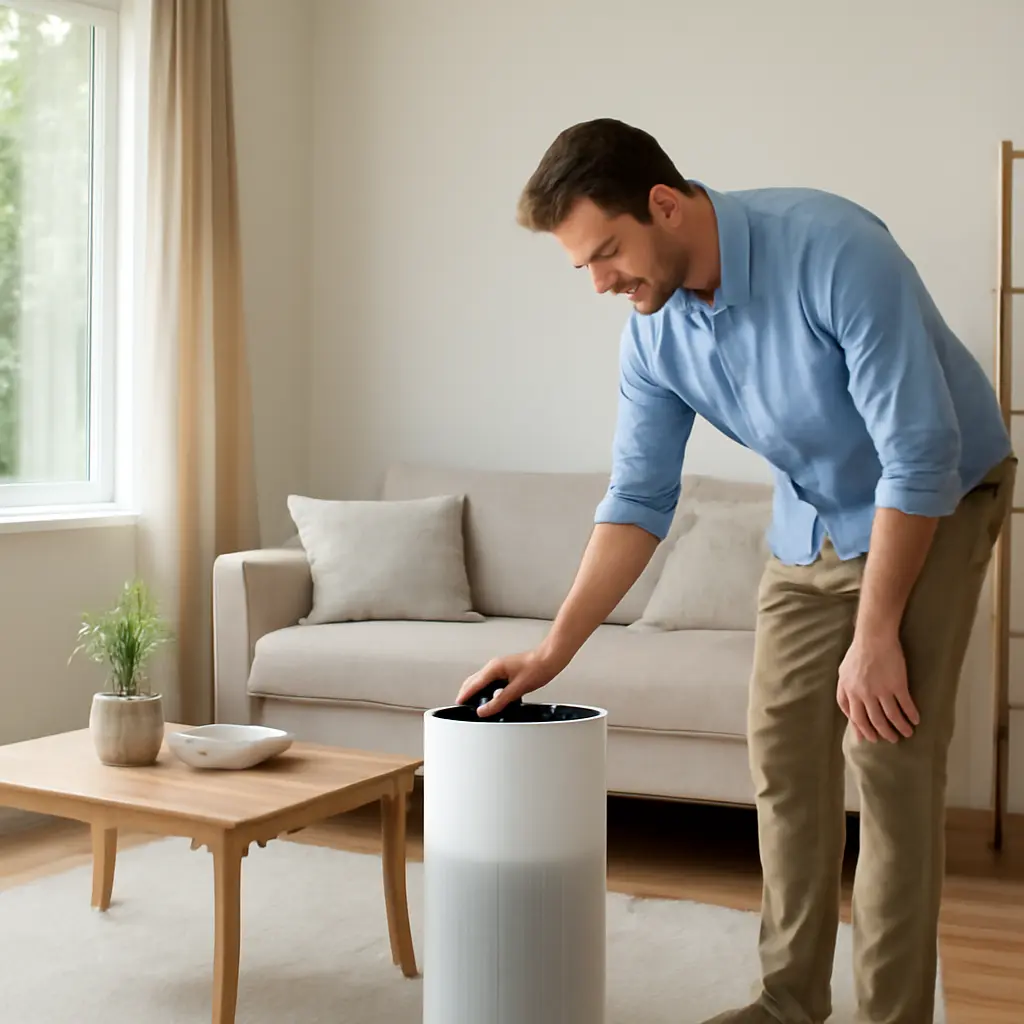
A practical home purifier should match the room’s size and the pollutant of concern. For particles such as smoke and pollen, compare CADR with room area and check whether the unit can run at a tolerable noise level. For gases and odors, particle filters alone may not be sufficient; the device needs an appropriate gas-removal medium, and performance claims should identify the compounds tested. The EPA recommends addressing pollution sources and improving ventilation when outdoor conditions permit, alongside filtration.
Consumers should also check replacement-filter availability and cost, avoid devices that intentionally produce ozone, and be cautious about vague claims such as “destroys all pollutants.” Nanofiber construction can be a useful design feature, but it does not by itself establish superior room-level performance or longer filter life.
Cooking, wildfire smoke, and everyday exposure
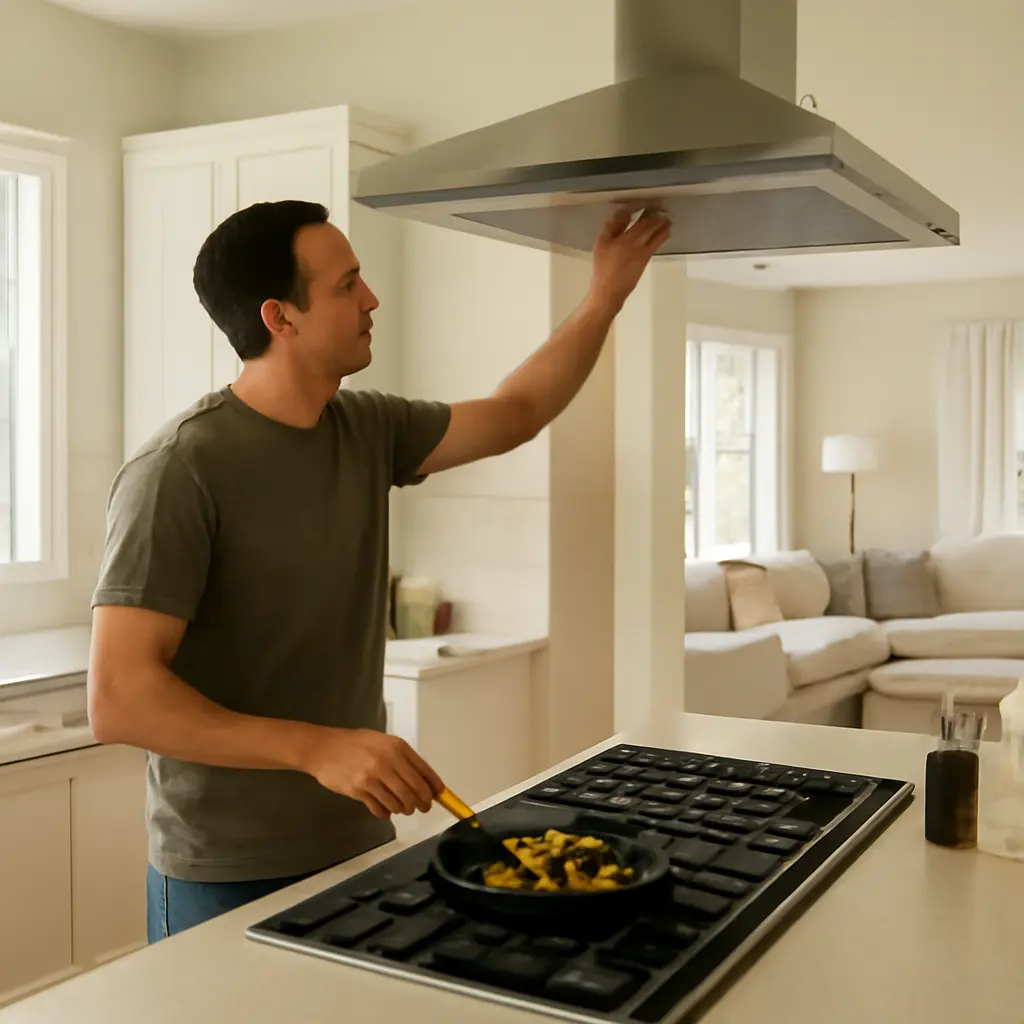
Different pollution events call for different responses. During cooking, using an externally vented range hood and reducing emissions at the source can be more direct than relying on a purifier alone. During wildfire smoke episodes, public-health guidance commonly emphasizes closing windows when outdoor air is poor, using appropriately sized particle filtration, and limiting activities that generate indoor particles. A purifier’s sensor may help users observe changes, but it cannot identify every hazardous pollutant or replace official air-quality advisories.
These examples illustrate why “air purification” is not a single outcome. Particle capture, gas adsorption, microbial inactivation, and pollutant sensing are separate capabilities. The best system combines source reduction, adequate ventilation when appropriate, and filtration selected for the exposure in question.
What will shape the next generation
The field’s likely progress will depend less on increasingly small materials alone and more on demonstrable whole-device performance. Researchers and manufacturers are exploring lower-resistance filter media, durable functional coatings, sensor-based controls, and designs that reduce energy use. The decisive evidence will include testing in occupied or realistically simulated spaces, long-term durability, safe disposal, and assessment of particles or chemicals released by the device itself.
Regulation and transparent standards will also matter. Product labels should make clear which pollutants were tested, under what conditions, and for how long. Independent evaluation can help clinics avoid unsupported infection-control claims and help households compare devices on useful measures rather than marketing language. For nanomaterials, lifecycle questions—including worker exposure during manufacture and filter disposal—deserve attention alongside the purifier’s operation.
Conclusion
Nanotechnology air purification spans nanofiber filtration, antimicrobial or photocatalytic surfaces, and nanosensor-enabled controls. These approaches may improve specific aspects of indoor air cleaning, but their value in clinics and homes must be demonstrated through reliable, room-relevant performance and safety testing. The strongest near-term strategy remains layered: reduce pollution at its source, maintain suitable ventilation, select filtration for the contaminants of concern, and service equipment as directed.
Before purchasing or specifying a nanotechnology-based purifier, ask for independent test data on clean-air delivery, pollutant-specific performance, emissions, and maintenance requirements. Clinics should involve infection-prevention and facilities teams; households should consult public-health guidance for local risks. Continued research and transparent testing will determine whether nanoscale innovations become dependable improvements rather than simply new product labels.
Sources: National Nanotechnology Initiative, What Is Nanotechnology?, https://www.nano.gov/nanotech-101/what/; U.S. Environmental Protection Agency, Guide to Air Cleaners in the Home, https://www.epa.gov/indoor-air-quality-iaq/guide-air-cleaners-home; World Health Organization, Household Air Pollution, https://www.who.int/news-room/fact-sheets/detail/household-air-pollution-and-health; U.S. Centers for Disease Control and Prevention, Ventilation in Buildings, https://www.cdc.gov/niosh/ventilation/about/index.html; U.S. Centers for Disease Control and Prevention, Ventilation FAQs, https://www.cdc.gov/niosh/ventilation/faq/index.html.
Related Posts
How to stop pollutants drifting between connected living spaces
Pollutant transfer between connected living spaces occurs when smoke, cooking…

How Air Purifiers Actually Clean Your Indoor Air
Air Purifiers: Filtration Technologies and How They Clean Indoor Air…
HEPA Filters vs. Ionizers Versus Activated Carbon Explained for Homeowners
Home air cleaners use different technologies to target different pollutants:…